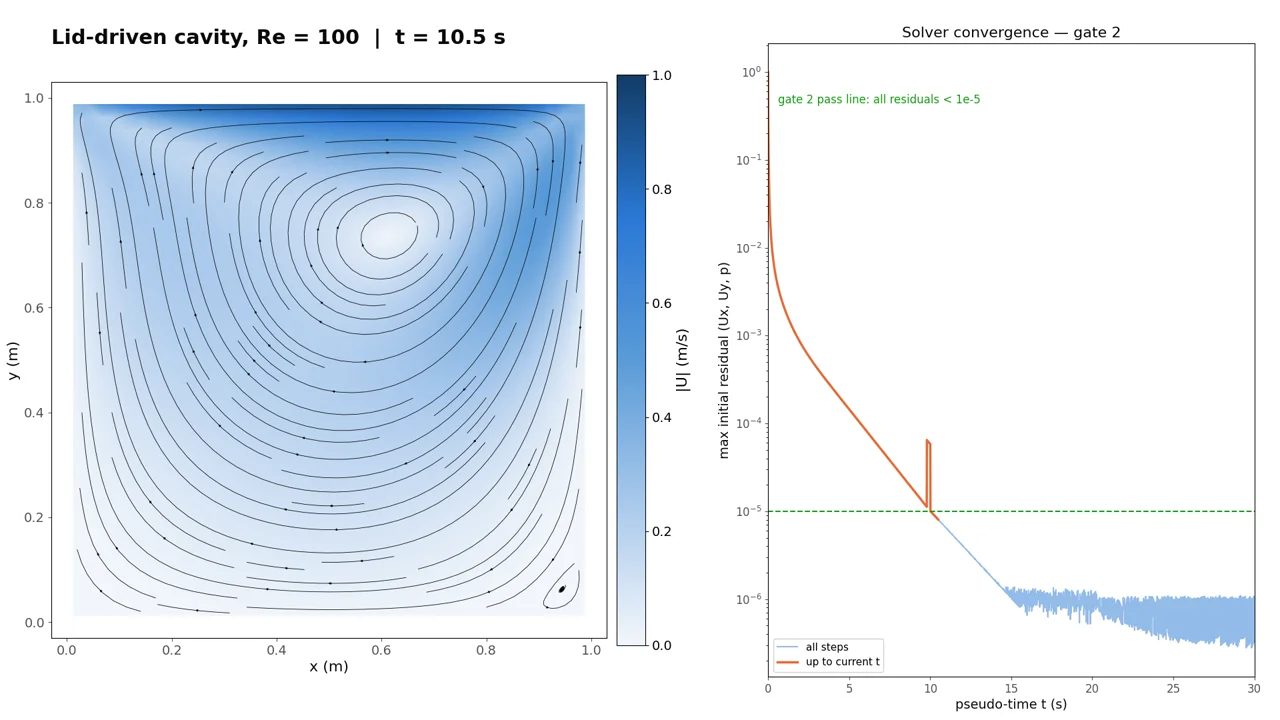
Demo gallery · 9 demos, all reproducible

Real engineering, graded
by an independent judge.

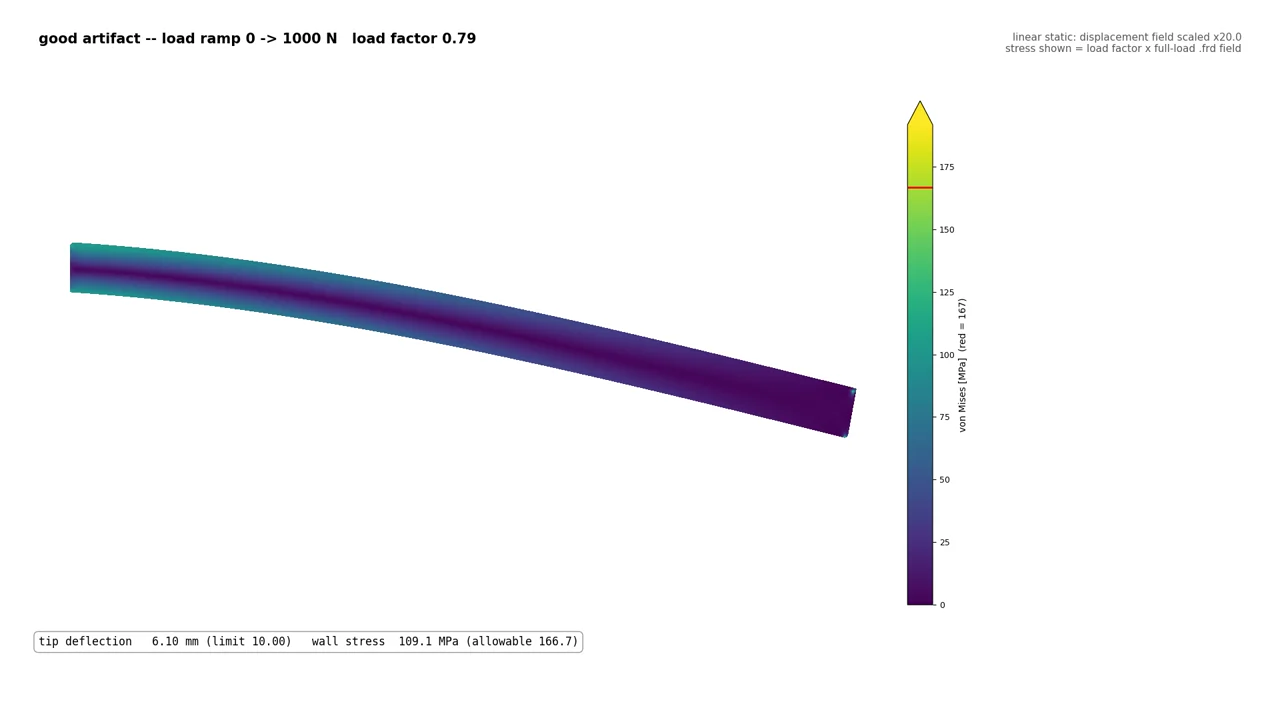
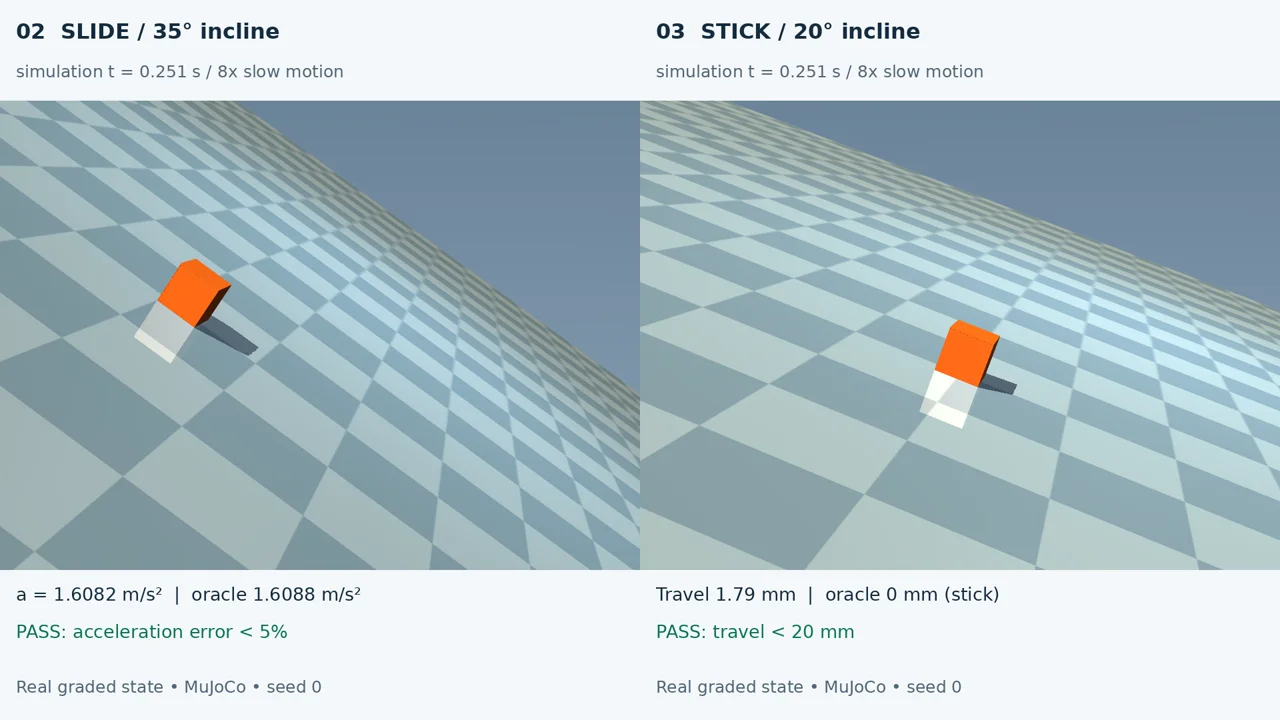
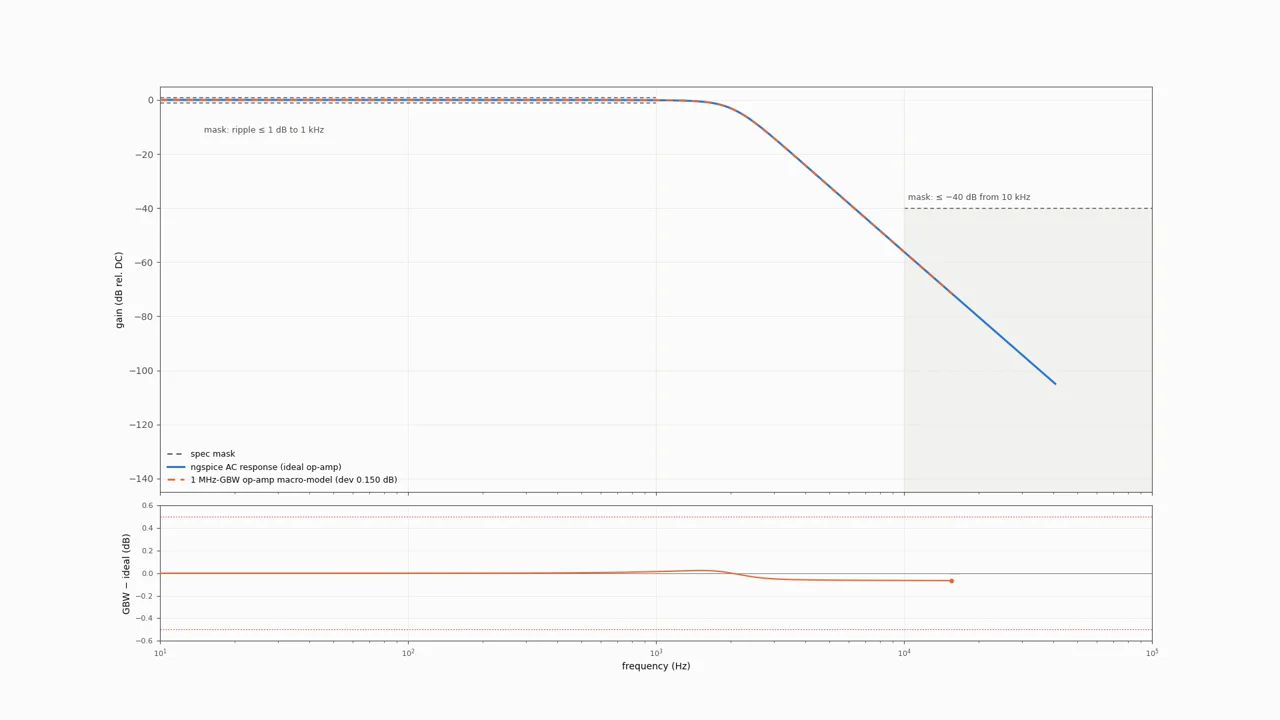
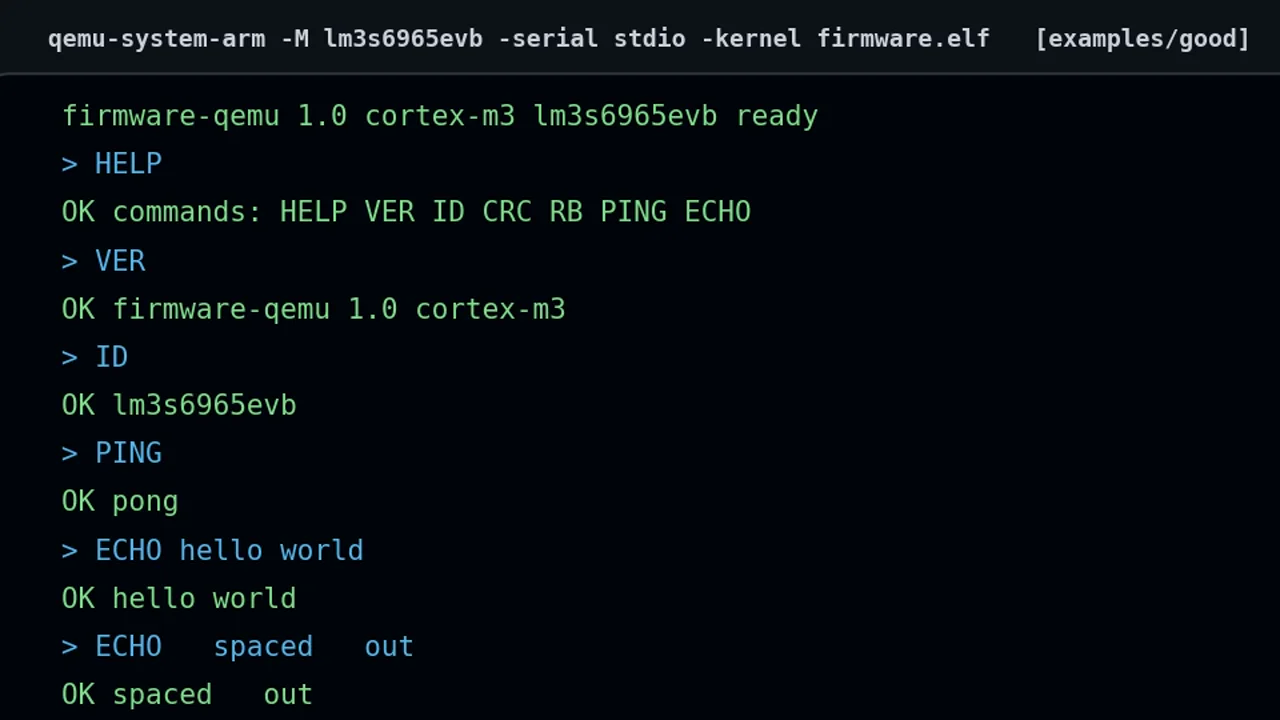
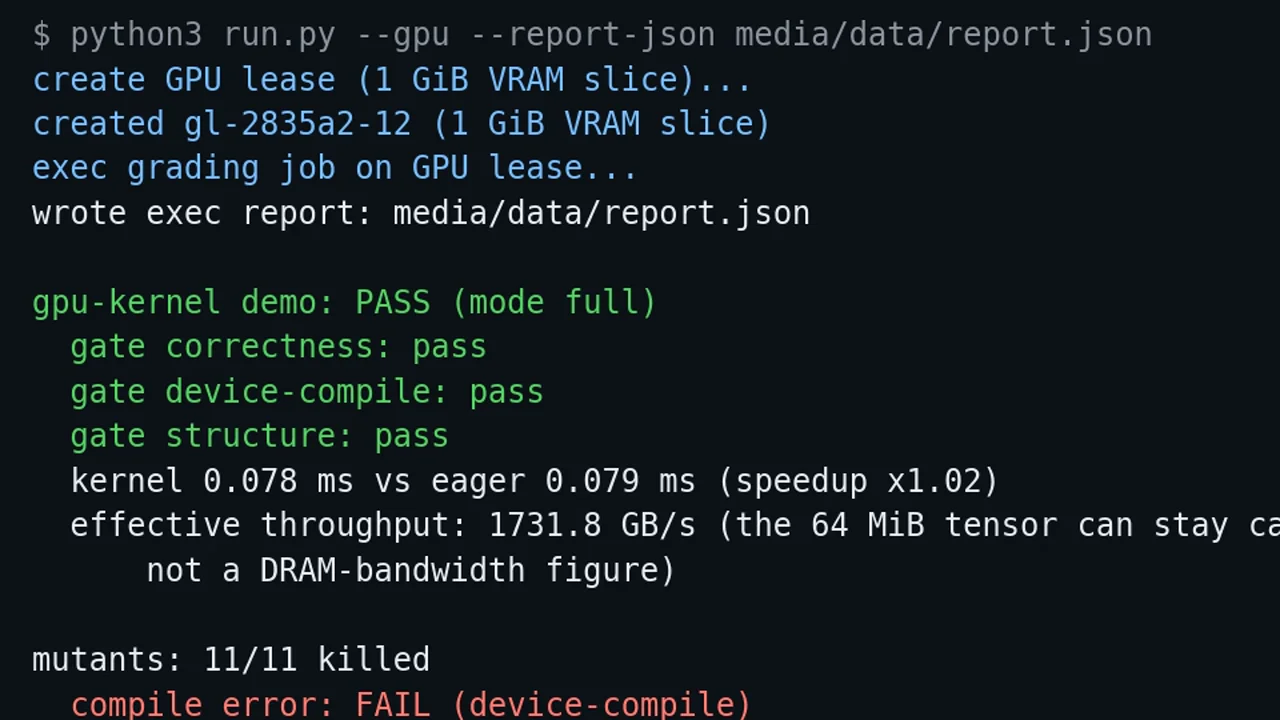
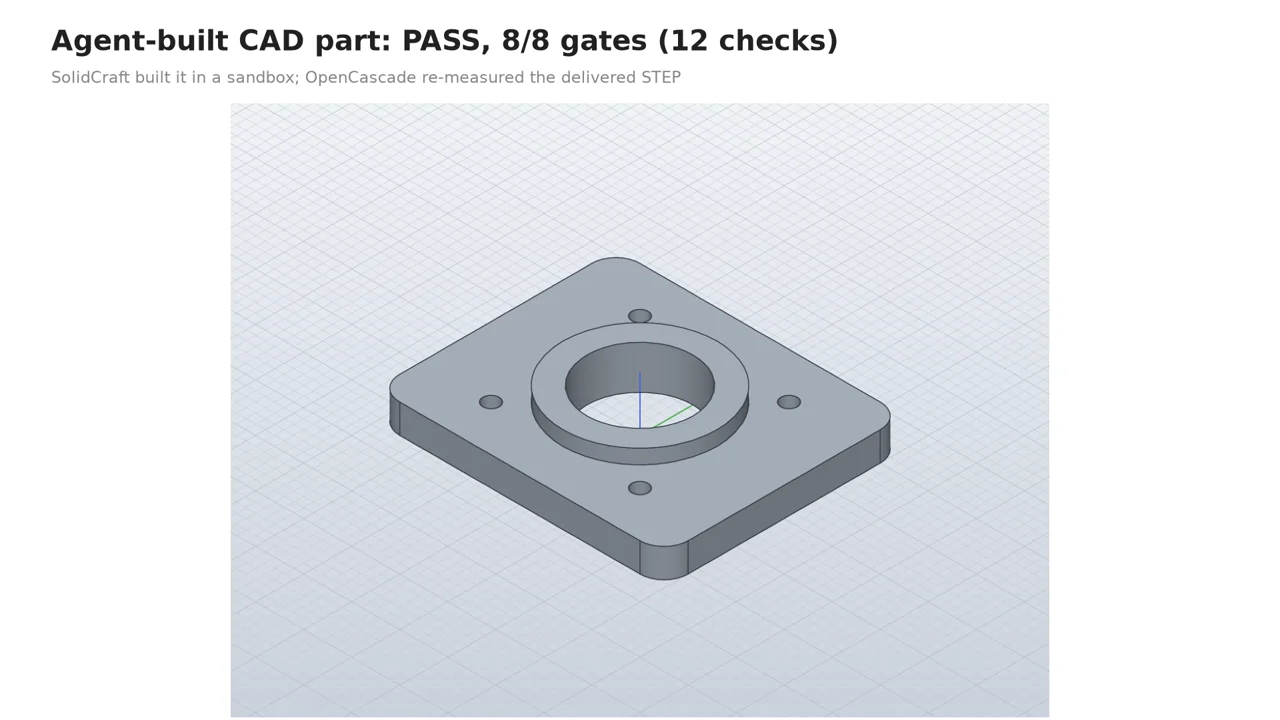
Each demo is a real problem — a flow solver, a beam, a filter, firmware, a PLC, a GPU kernel, a CAD part — that an agent solves inside a disposable sandbox. A judge with numeric pass rules — checked against analytic solutions, reference tools or published data — decides whether the result is right. Watch it, paste the prompt into your own agent, or rerun it with one command.

94/94
known-bad artifacts rejected by the judges' self-tests
9/9
reproduced by a second agent from the README alone (gpu-kernel on its CPU path)
9 toolchains
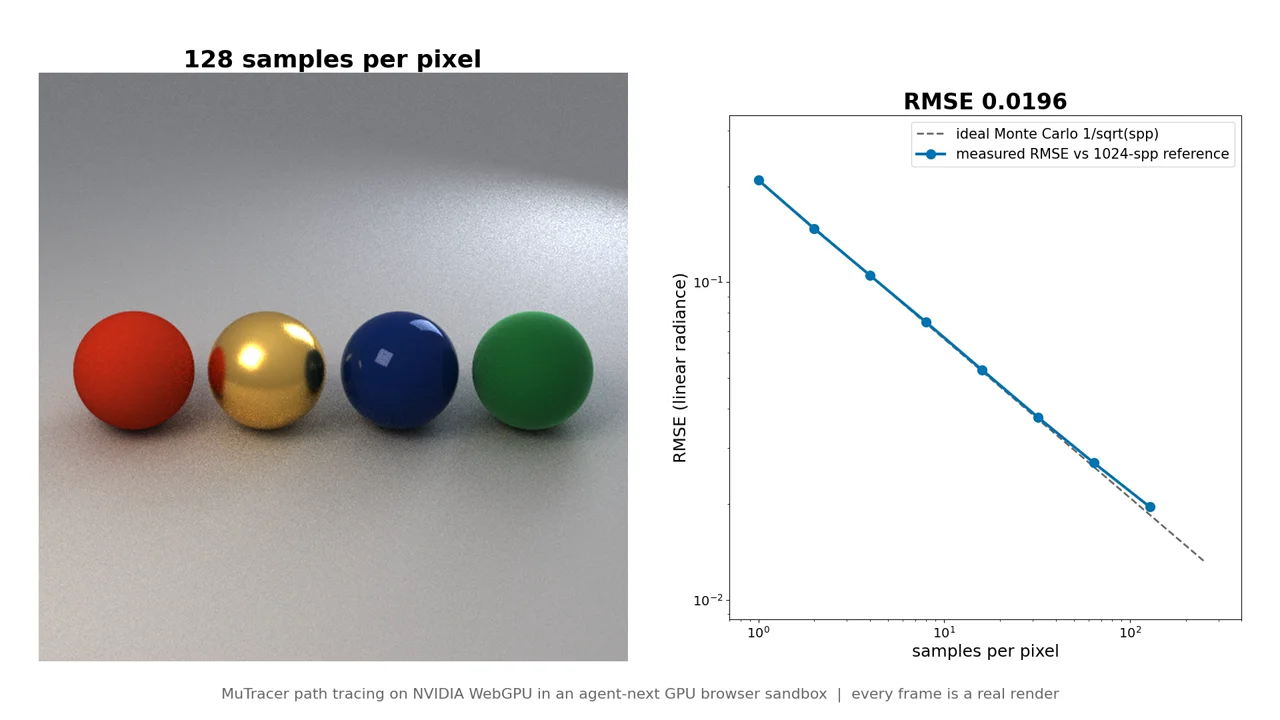
OpenFOAM, CalculiX, MuJoCo, ngspice, arm-none-eabi-gcc, MATIEC, Triton, MuTracer and SolidCraft; one command reruns any demo end to end in a fresh sandbox
~2–70 s
per judge run of the known-good example in the receipts (2 vCPU), so an agent can iterate

More in the cookbook

Every demo lives in the public cookbook with its spec, judge and receipt.

How a demo earns its place

A demo is added only after it clears every step below. The full rules are the public demo standard.

  1. A spec and a judge. Numeric, deterministic pass rules checked against an analytic solution, a reference tool or published data — never just “the solver ran”.
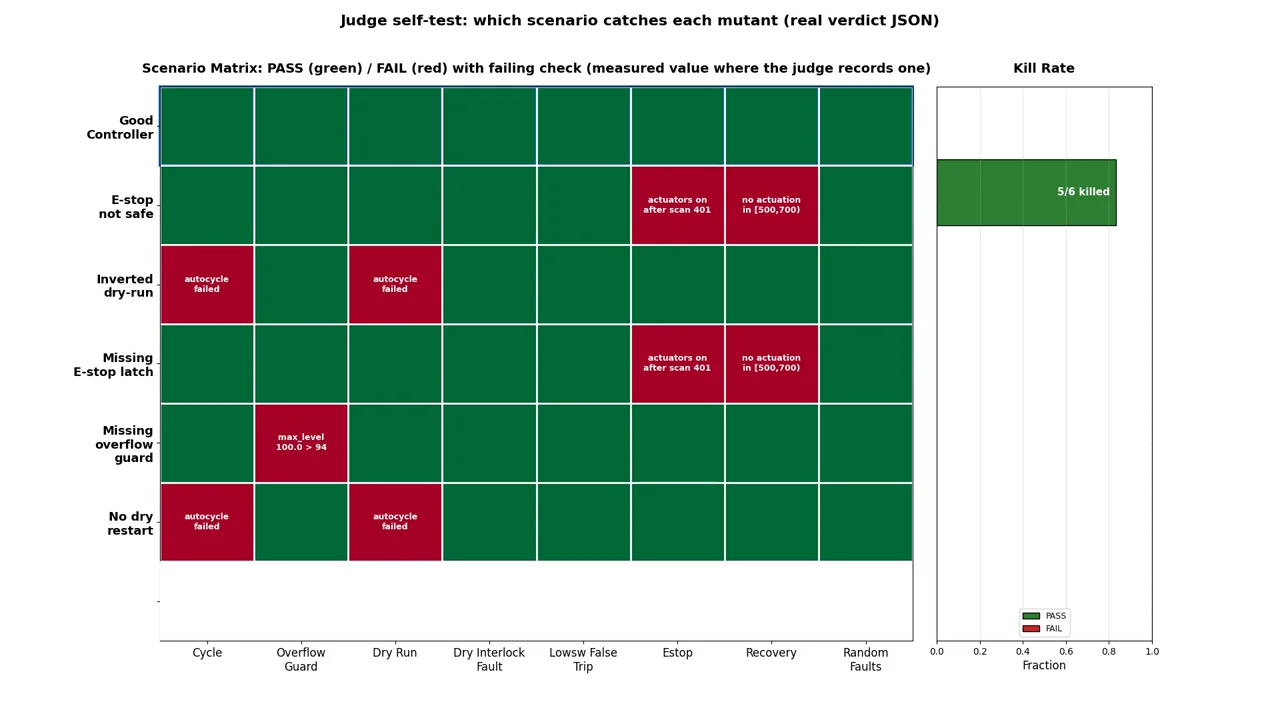
  2. The judge proves it can fail. A self-test feeds it known-bad artifacts; it must reject at least 90 % of them. Every judge here rejects all of its own.
  3. Two clean-setup runs. Pinned tool versions, sha256-checked downloads, and real command output from two runs that each install every tool from nothing — on a fresh sandbox, or on the same one with everything the setup installed purged first.
  4. A second agent reproduces it. A different agent follows only the README in a fresh sandbox and must get the same numbers.

For agents: the gallery is also served as JSON at /demos/demos.json.

Run one yourself

Sign in with GitHub for a free key with 10 sandbox-hours. Every demo above finishes in minutes and kills its sandbox when it is done.